

Problem: learners study, but rarely speak
Fix: tiny daily output loops
Best length: 10–20 minutes
Variety: European Portuguese if you live in Portugal
Most adults do not fail Portuguese because they lack resources. They fail because speaking never becomes a habit. Here is a routine that fits remote work, parenting, and newcomer schedules.
The 15-minute speaking loop
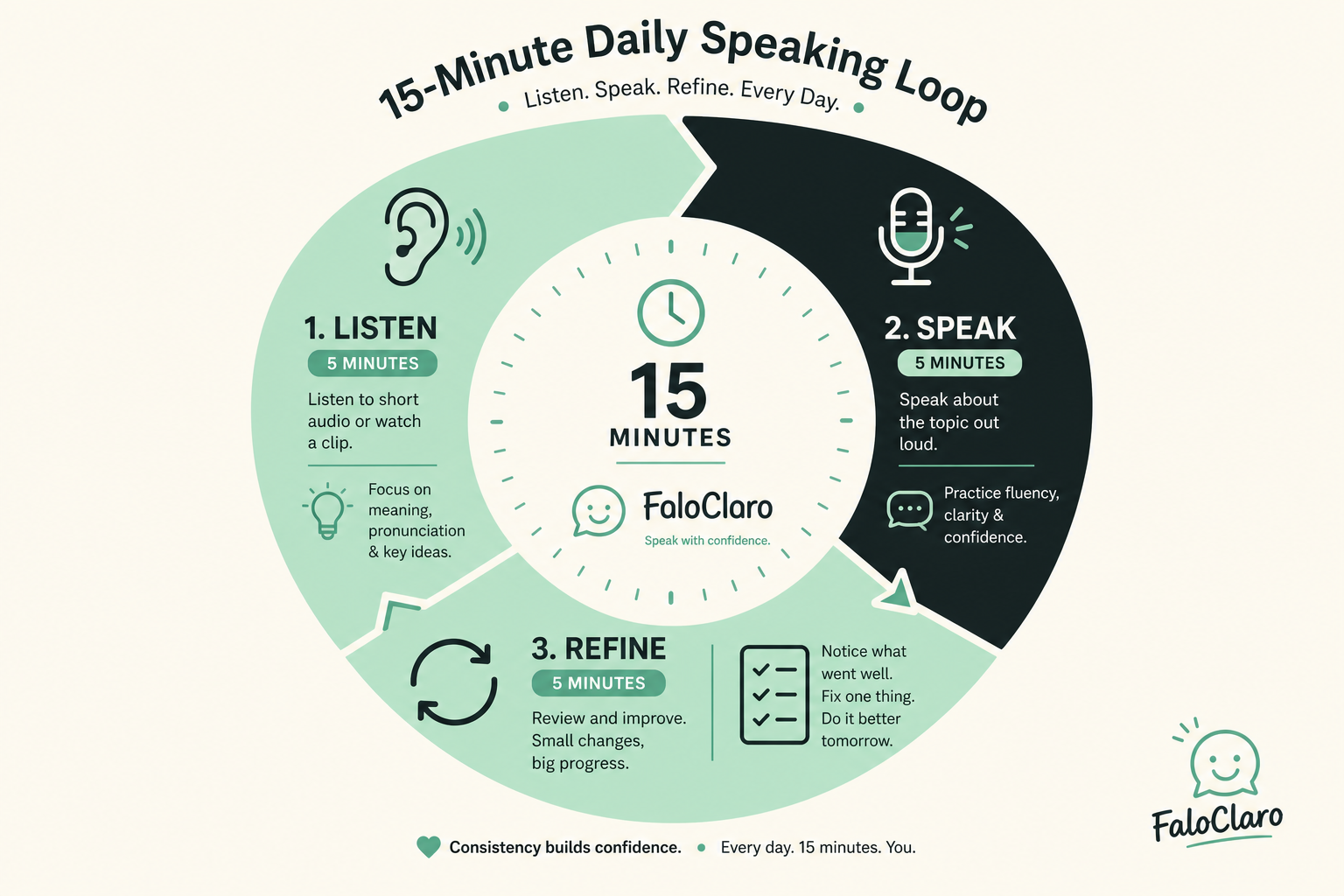
| Minutes | Action | Rule |
|---|---|---|
| 0–3 | Warm-up listen (pt-PT) | No translating every word |
| 3–10 | Speak aloud on 3 prompts | Phone voice memo is enough |
| 10–15 | Re-say the weakest answer | One improvement only |
Prompt bank (A1–A2)
- Who are you and why are you in Portugal?
- Describe your morning.
- Explain a problem to a landlord or receptionist.
- Order food and change one detail.
- Ask for directions, then confirm.
Why voice notes beat silent study
- You hear your real pace
- You cannot hide behind multiple-choice
- You build tolerance for imperfect sentences
CEFR spoken interaction is about getting things done with language, not producing exam essays in your head.
Rising trend: chat-native practice
People already live in messengers. Putting Portuguese practice inside Telegram (or similar) removes the “open a special study app” friction — one of the biggest drop-off points in 2025–2026 language learning behaviour.
Weekly structure
- 5 days: 15-minute loop
- 1 day: longer dialogue (25–30 min)
- 1 day: rest or light listening only
Mistakes to avoid
- Waiting for a language partner every time (solo reps still count)
- Correcting every error live (pick one pattern per day)
- Mixing five accents in one week without a primary target
Soft next step
FaloClaro runs short European Portuguese lessons with voice replies in Telegram — useful when you want prompts and feedback without building the routine from zero.